


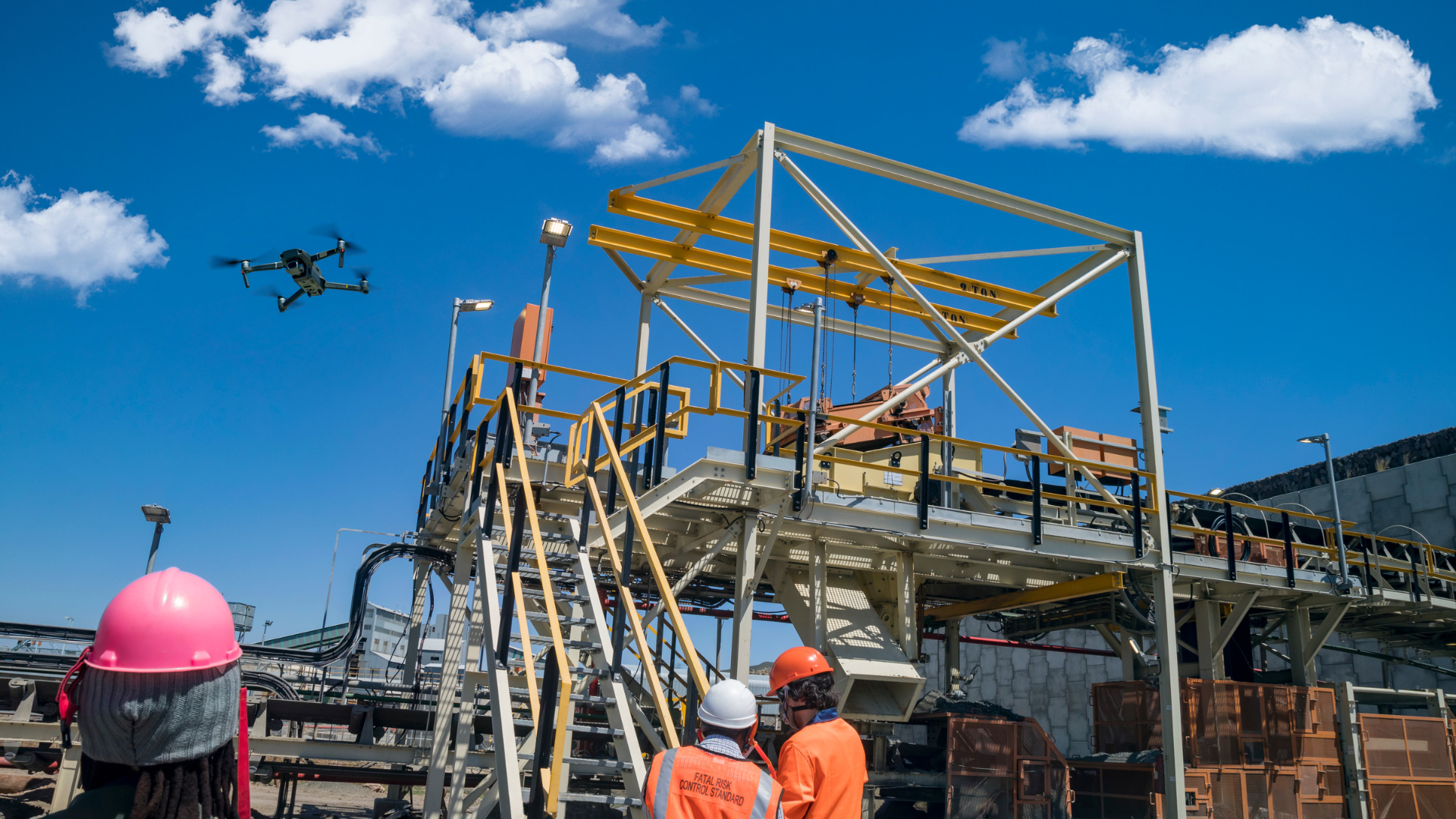
A building may look perfectly fine from the outside while hiding problems beneath its surface. Moisture can accumulate inside walls, insulation may contain gaps, and structural elements can deteriorate long before serious damage becomes visible. Finding these problems is essential when renovating buildings, but traditional inspections can sometimes require scaffolding, access to difficult areas or even the removal of construction materials.
Could we investigate a building’s condition without breaking through its walls?
Non-destructive testing (NDT) and non-destructive evaluation (NDE) offer ways to investigate building conditions without unnecessarily damaging the structure. By using specialised sensors and measurement techniques, professionals can gather information about building materials and detect signs of deterioration while minimising damage to the structure. Combined with robotics and digital technologies, these methods could help make building inspections safer, more efficient and more precise.
Looking Beyond What the Eye Can See
A visual inspection is often the first step in assessing a building. Cracks, stains, peeling paint and other visible changes can provide valuable clues about its condition. However, not every defect produces an obvious sign on the surface. Moisture may accumulate behind a façade, insulation may become detached, or internal damage may develop without being identifiable through visual observation alone.
This is where non-destructive testing and evaluation techniques become useful. Rather than removing material to inspect what lies underneath, they measure physical properties such as temperature, reflected signals, vibrations or the response of a material to a particular stimulus. Different methods reveal different types of information. No single technique can identify every defect in every material, so selecting the appropriate method depends on the building component, the suspected problem and the conditions in which the inspection takes place.
How Can Non-Destructive Testing Detect Hidden Problems?
Several technologies can help professionals investigate parts of a building that are difficult to assess visually.
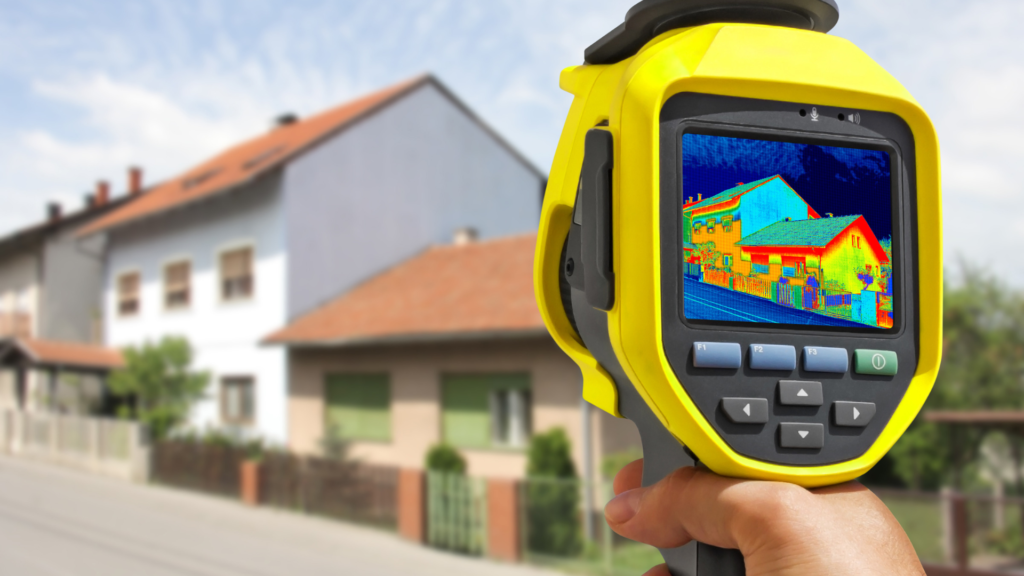
Infrared thermography (temperature differences): An infrared camera detects infrared radiation emitted by surfaces and converts it into a thermal image. Differences in surface temperature can reveal patterns that are not visible in an ordinary photograph. For example, thermal imaging can help identify areas associated with insulation deficiencies, thermal bridges or moisture-related anomalies. These patterns provide clues about the building envelope and its performance. However, a thermal image cannot tell the whole story on its own. Temperature differences can have many causes, so thermography works best when its results are combined with other inspection methods to build a more complete picture of a building’s condition. These applications and limitations are examined in the scientific review Infrared thermography (IRT) applications for building diagnostics.
Advanced sensors (for material condition): They are used to investigate the properties of construction materials. Depending on the method, measurements can provide information about internal discontinuities, material degradation or structural condition. For example, ultrasonic methods analyse how sound waves travel through a material, while other sensing approaches use electromagnetic or mechanical responses to identify potential anomalies. These measurements can help locate areas that require further investigation without requiring immediate destructive sampling. Their effectiveness depends on the material being examined, the type and depth of the defect, and the capabilities of the equipment. A broader overview of these approaches is available in A scoping review of non-destructive testing (NDT) techniques in building performance diagnostic inspections.
Combining techniques for a clearer picture: Each measurement method has strengths and limitations. A thermal image may highlight an unusual area, while another sensor can provide complementary information about the material itself. Combining measurements can therefore help professionals interpret what they observe more confidently. The objective is not simply to collect more data, but to obtain information that supports a reliable assessment of the building’s condition.
Why Is Inspecting a Building Still So Challenging?
Even when suitable non-destructive testing technologies exist, their use on a real building can be difficult.
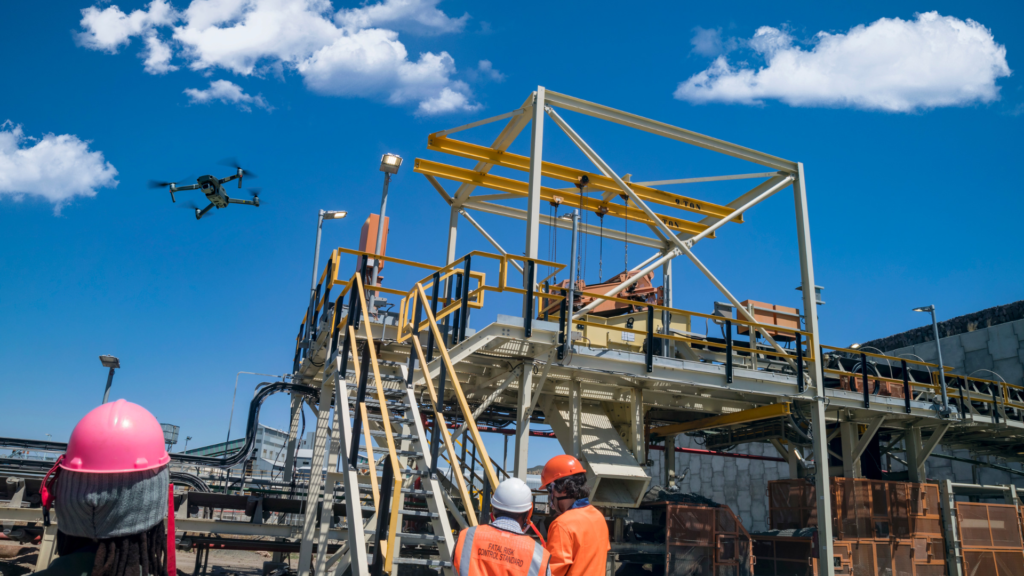
Façades may extend several storeys above the ground, surfaces can be irregular, and some areas may be inaccessible without scaffolding or specialised equipment. Inspections can also expose workers to risks associated with working at height. In addition, measurements must be interpreted in context. A detected anomaly does not automatically mean that a building component is unsafe or needs to be replaced. Professionals must establish what the signal means, assess the significance of the finding and determine whether further investigation is necessary.
This creates an opportunity for robotics and automation. If sensors can be carried by robotic platforms, inspections could reach difficult locations while reducing the need for workers to access hazardous areas directly.
From Sensors to Robots: A New Approach to Building Inspection
Robotics could change not only where inspections take place, but also how the information is collected. Drones can access elevated façades and capture visual and sensor data from areas that would otherwise be difficult to reach. Robotic platforms can also help position inspection equipment, while automated systems can process measurements and identify patterns that deserve closer attention.
Artificial intelligence can support this process by analysing images and sensor data to detect or classify potential defects. Nevertheless, automated detection is not the same as a definitive diagnosis: the reliability of the results depends on the quality of the data, the models used and their validation under real conditions.
Integrating these technologies could create a more connected workflow. Instead of treating inspection, diagnosis and repair as separate activities, information gathered during an inspection could help professionals plan subsequent interventions and monitor the results.
How Is RADIANCE Contributing?
The RADIANCE project is developing robotic, automated and digital technologies to support non-destructive testing, safer and more efficient building renovation.
Within the project’s Inspection, Diagnosis & Renovation Validation Scenario, autonomous drones will support façade inspections and access to difficult-to-reach areas, while Non-Destructive Evaluation probes will contribute to structural condition assessment. AI-based systems will support defect detection and damage classification, and cable-robot systems will be explored for repair operations such as crack stitching.
Inspection data will also be integrated into BIM models and Digital Twins, helping connect building assessment with data-driven renovation planning and subsequent interventions. An autonomous drone platform will also be explored for automated spraying operations.
These technologies form part of the wider Technologies Behind RADIANCE ecosystem, which brings together robotic, sensing, automated and digital solutions supporting different stages of construction and renovation.
Through its Validation Scenarios, RADIANCE will test and demonstrate how these technologies can work together in real building and construction environments. By connecting inspection, diagnosis, digitalisation and robotic intervention, the project is exploring how renovation can become a more integrated and effective process.
What Are the Limits of Non-Destructive Testing?
Despite their potential, these technologies are not a universal solution. Some defects may remain difficult to detect, while others may produce signals that are ambiguous or require additional investigation.
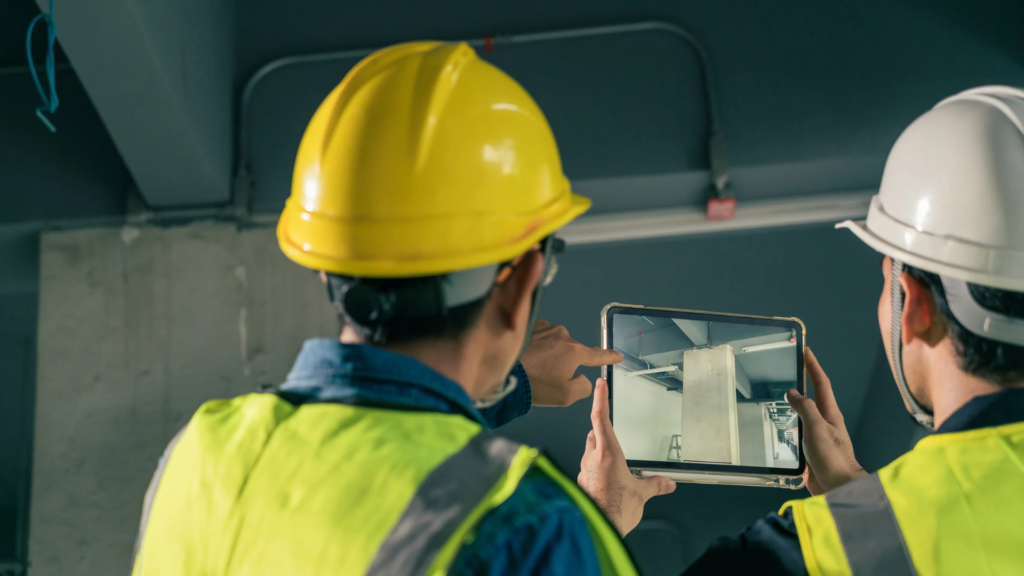
Results can also be influenced by material properties, environmental conditions, equipment limitations and the experience of the people interpreting the data. In some cases, destructive testing or direct examination may still be necessary to confirm a diagnosis.
The aim is not to replace professional expertise, but to provide better information for informed decisions. Combining complementary techniques, validating automated results and understanding the limitations of each measurement are essential steps towards reliable building assessment.
Towards Smarter and More Efficient Renovation
Understanding what lies beneath a building’s surface is an important step towards maintaining safer, more efficient and longer-lasting structures. Non-destructive testing and evaluation can reveal clues that visual inspections alone might miss, while robotics and digital technologies offer new ways to collect, analyse and use that information.
By bringing these approaches together, projects such as RADIANCE are exploring how building inspections could become more connected to the repair and renovation process.
The question is no longer simply whether we can inspect a building without opening its walls. It is how we can turn the information we obtain into reliable diagnoses, better-planned interventions and more efficient renovation practices.
Author: Miguel Ángel Álvarez Sánchez