


The building renovation sector is now at the very center of the European Union’s climate strategy. Transforming Europe’s building stock has become a structural necessity in order to achieve climate neutrality by 2050. Today, Europe faces the major challenge of modernizing an aging and inefficient building stock that consumes resources in a disproportionate way.
Did you know that our homes and offices are the largest consumers of energy in Europe? Buildings account for around 40% of total energy consumption and are responsible for more than one third of greenhouse gas emissions.
The challenge lies in the fact that most of Europe’s existing buildings are old and were constructed at a time when little attention was paid to environmental impact. In fact, it is estimated that 90% of the buildings that will be in use in 2050 have already been built. Without large-scale building renovation efforts, Europe will continue wasting energy, resources, and money.
Why building renovation is urgent
Today, the energy renovation rate in Europe remains extremely low. At the current pace, it would take decades to meet the EU’s sustainability and climate targets.
However, the issue goes beyond environmental impact. Poorly insulated buildings are also expensive for citizens. Across Europe, nearly 34 million people suffer from energy poverty, meaning they cannot afford to heat their homes adequately.
Improving building renovation rates would not only reduce emissions, but also help lower energy bills and significantly improve quality of life for millions of Europeans.
The European Plan: The Sustainable Renovation Wave
To address these challenges, the European Union launched the Renovation Wave, an ambitious strategy aimed at doubling the building renovation rate by 2030.
Alongside this initiative, new regulatory frameworks have been introduced, including the Energy Performance of Buildings Directive (EPBD). These regulations establish binding milestones for improving building energy performance. For example, the least efficient buildings will be required to reach higher energy performance standards by 2030 and 2033.
To ensure that these transformations do not become an unbearable burden for citizens, several financial support mechanisms have been mobilized. Major funding instruments include the Recovery and Resilience Facility (RRF), the European Regional Development Fund (ERDF), and the Cohesion Fund, all of which aim to support large-scale renovation projects across Europe.
Diagnosis as a key tool for effective building renovation
One of the greatest risks in building renovation is carrying out interventions without a proper prior assessment. It would be similar to visiting a doctor and receiving treatment without first undergoing a diagnosis.
The same principle applies to buildings: renovation should never be done blindly. Instead, an integrated planning approach is necessary to ensure effective and sustainable results.
Traditionally, Energy Performance Certificates (EPCs) have functioned mainly as administrative requirements, similar to appliance labels. However, these certificates often fail to reflect the real energy performance of buildings.
Today, there is a growing effort to transform EPCs into dynamic tools, capable of providing updated and reliable information about how buildings consume energy and how their performance can be improved.
Accurate diagnosis is essential to identify priority areas for improvement, optimize thermal insulation, and enhance energy efficiency, while considering the building as an interconnected system.
The key: deep and well-planned renovations
Effective building renovation goes beyond simply replacing windows or making isolated improvements. The most impactful approach involves deep renovation, capable of achieving at least 60% energy savings.
This type of renovation typically includes:
- Improving building insulation by properly insulating walls and roofs
- Replacing outdated heating systems with modern, clean technologies
- Considering the full life cycle of materials, evaluating not only operational energy consumption but also the environmental impact of manufacturing and construction materials used during renovation
- Deep renovation strategies allow buildings to drastically reduce energy consumption while improving comfort and long-term sustainability.
RADIANCE: Robots and technology supporting building renovation
Within this growing innovation ecosystem, RADIANCE emerges as a technological solution designed to accelerate and optimize building renovation processes.
RADIANCE is a Horizon Europe project that develops an integrated suite of robotic, digital, and artificial intelligence (AI)-based technologies to support the entire renovation lifecycle.
Through advanced technologies, RADIANCE makes renovation processes faster, safer, and more efficient.
Drones and intelligent inspection
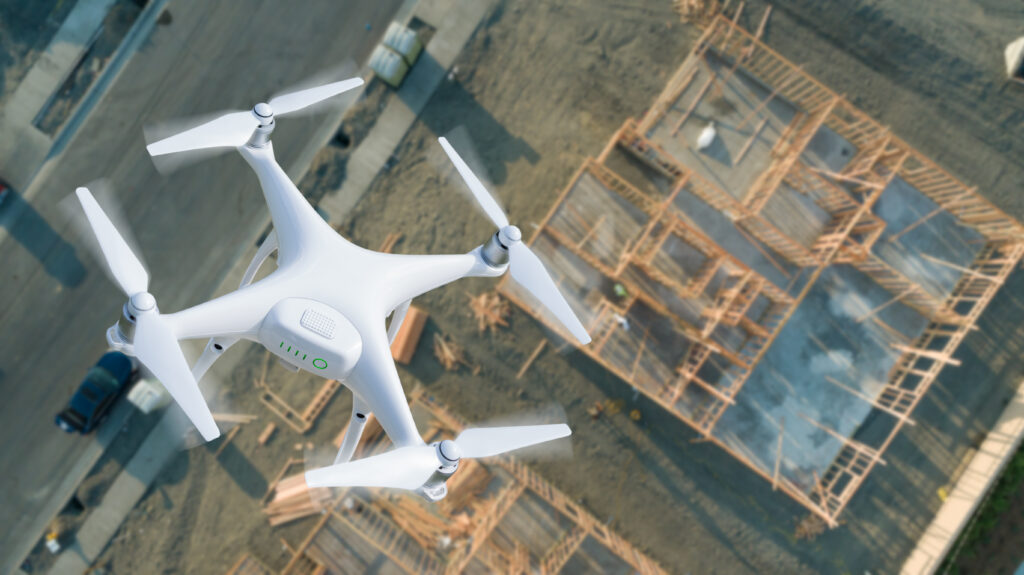
RADIANCE uses drones equipped with smart cameras and AI-based assessment tools to automate initial building inspections. These systems can detect structural or thermal defects with a level of speed and precision that would be impossible for manual inspection alone.
This approach significantly reduces the time required for the initial diagnosis phase.
Human-robot collaboration
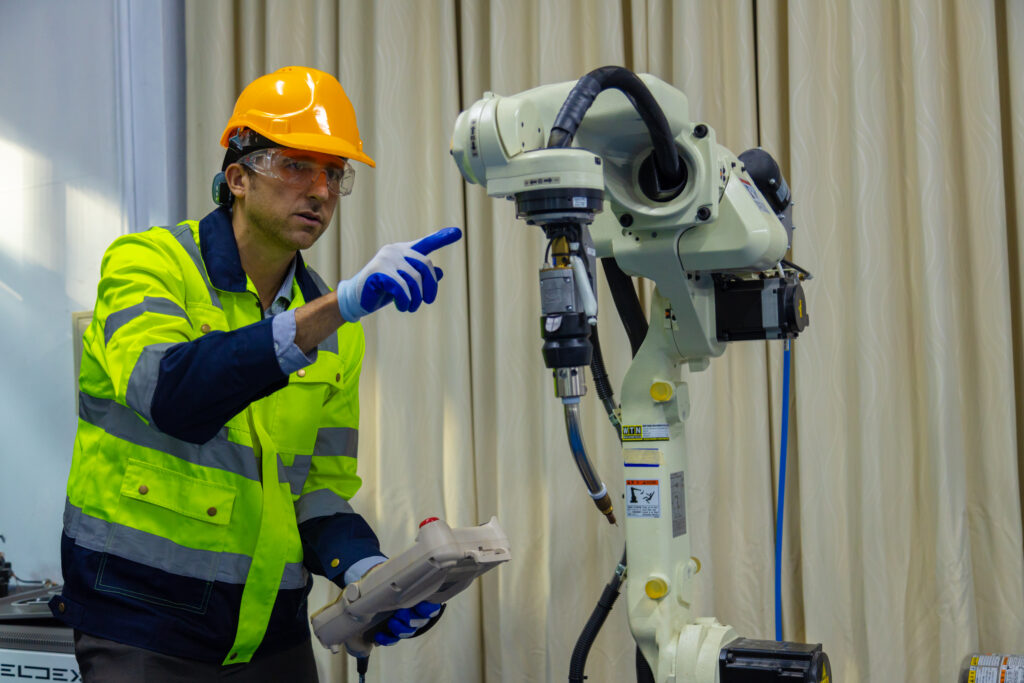
The project also introduces human-robot collaboration systems, where robotic assistance technologies work alongside construction workers.
Combined with Virtual and Augmented Reality (AR/VR) tools, these solutions help workers perform complex or hazardous tasks more safely, improving overall safety on construction sites.

Digital twins and intelligent monitoring
RADIANCE also deploys digital twin platforms and quadruped robotic systems to enhance site monitoring and resource management. These technologies enable more precise planning and real-time tracking of renovation activities.
As a result, the renovation process becomes more efficient while reducing its environmental footprint.
Towards a new generation of sustainable buildings
Ultimately, RADIANCE contributes to bridging the gap between the ambitious policy goals of the Renovation Wave and the actual execution capacity of the construction sector.
By digitalizing and automating renovation workflows, innovative projects like RADIANCE help transform Europe’s buildings from “energy black holes” into efficient, intelligent assets within a decarbonized economy.
The transformation of Europe’s buildings is not only a technical challenge. It is also a unique opportunity to create a more sustainable, resilient, and socially inclusive future for all Europeans.