


Imagine a drone approaching a building façade, following a predetermined route and capturing images of its surface. During the inspection, its sensors identify a potential crack. Instead of simply continuing along its path, the drone approaches the area, collects more detailed information and then resumes its original inspection route.
This is the idea behind autonomous drone inspection: moving beyond aerial image collection towards systems capable of responding intelligently to what they observe. But how does a drone know where to fly, what to look for or when to investigate something more closely? The answer involves much more than the aircraft itself. Accurate positioning, flight planning, sensors, artificial intelligence (AI) and environmental monitoring all play a part.
Within RADIANCE, researchers are exploring how these technologies can work together to support more systematic, accurate and efficient building inspections.
Why Drone Inspection Is More Than Just Flying
Drones have become valuable tools for inspecting buildings and infrastructure. Equipped with cameras and other sensors, they can collect information from elevated façades, roofs and other areas that may be difficult or potentially dangerous for workers to access.
However, there is an important difference between remotely piloting a drone, following an automated flight route and conducting a genuinely adaptive inspection. A predefined flight can capture images systematically, but it does not necessarily respond to unexpected findings. An autonomous inspection system must be able to interpret information, adjust its behaviour and maintain safe operation within the surrounding environment.
Research into UAV-based façade inspection and defect detection highlights the importance of combining sensing technologies with computer vision and data-processing methods. The challenge is therefore not simply getting a drone into the air. It is making sure the information collected is accurate, relevant and useful for assessing the building.
Planning Drone Inspection: Precision Starts Before Take-Off
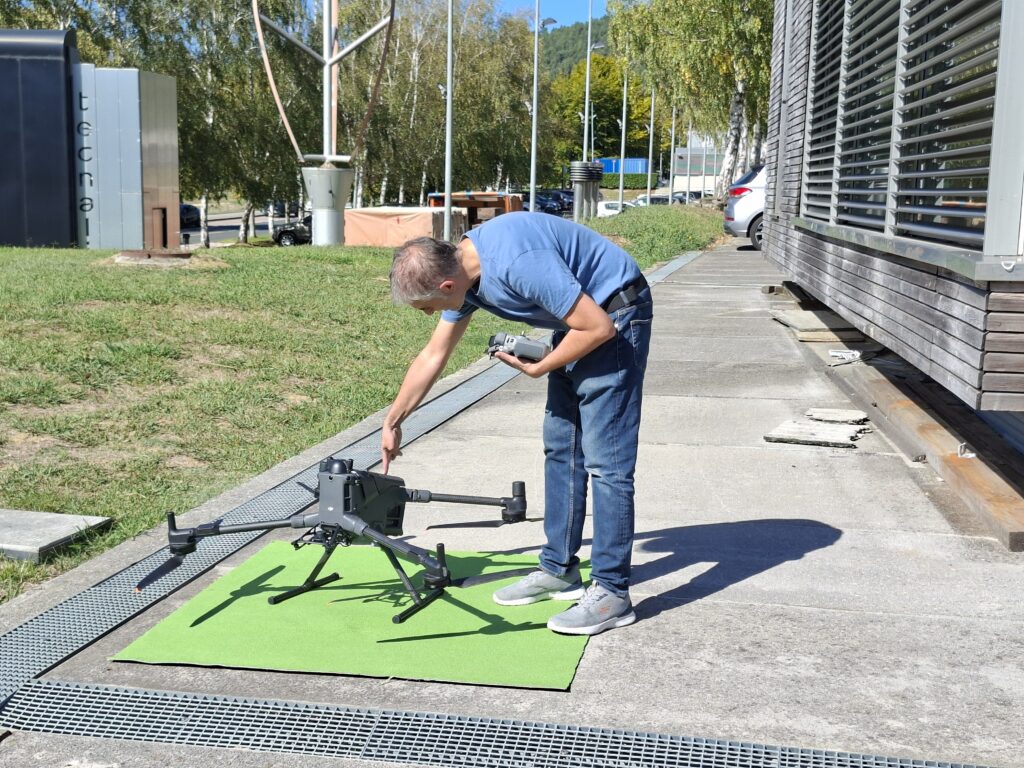
Reliable inspections begin long before a drone approaches the building. Flight planning is one of the first requirements. Researchers must consider the building’s geometry, inspection areas, obstacles and the distance between the drone and the façade. The objective is to achieve sufficient coverage while obtaining images at a resolution suitable for identifying potential defects. A study presented at ISARC 2025 on automated building inspection explored how Building Information Modelling (BIM) and Ground Sampling Distance (GSD) can support more systematic UAV inspection planning.
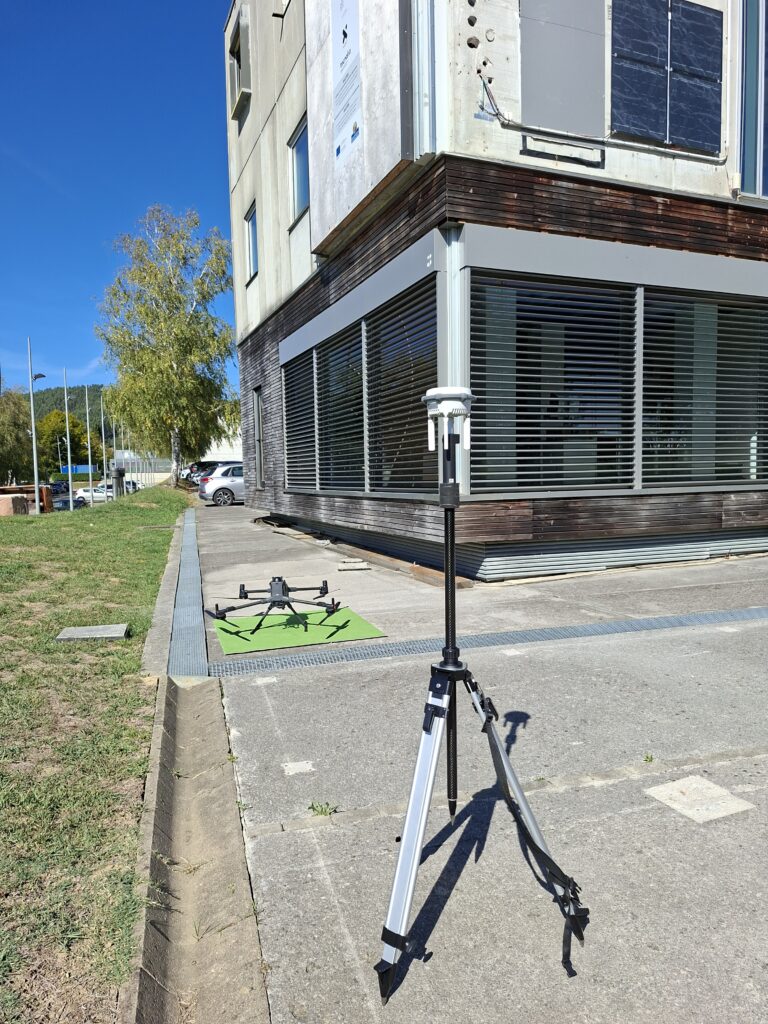
Positioning accuracy is equally important. If an inspection identifies damage, professionals need to know where that finding is located. Technologies such as Real-Time Kinematic (RTK) positioning can improve the georeferencing of UAV data. However, accuracy also depends on factors such as flight configuration, image quality and the surrounding environment, as explored in research on photogrammetric façade reconstruction using RTK-equipped drones.
Other elements, including calibration targets and reference markers, can help establish consistent relationships between captured images and known points on a building.
Weather conditions also matter. Wind can affect flight stability, while changing illumination and environmental conditions may influence image capture and sensor measurements.
All these factors contribute to the quality of the information collected during drone inspection.
How Could Autonomous Drone Inspection Work?
One of the developments being explored within RADIANCE is an inspection workflow designed to combine systematic façade coverage with more detailed investigation of potential defects.
The proposed workflow follows six connected stages:
- Flight Planning: The system defines waypoints around the building perimeter, establishing the route that the drone is expected to follow.
- Inspection: The drone follows the planned route while continuously collecting information about the building’s surface.
- Detection Trigger: An AI model analyses the captured information and identifies potential defects. When a finding exceeds a predefined confidence threshold, it can trigger further inspection.
- Autonomous Approach: The proposed system uses Simultaneous Localisation and Mapping (SLAM) to support navigation towards the detected area.
- Detailed Capture: Once positioned near the area of interest, the drone is intended to collect higher-resolution images and LiDAR information for closer assessment.
- Resume Route: After collecting the additional data, the drone returns to its inspection route and continues the planned survey.
This approach is significant because it introduces the possibility of adapting inspections to real-time findings while maintaining systematic building coverage. It is a proposed workflow under development, rather than a fully validated operational capability.
The Role of AI in Building Inspection
Artificial intelligence is a key component of this approach. During a building survey, a drone may capture hundreds or thousands of images. Reviewing this information manually can require considerable time, particularly when dealing with large or complex façades. AI-based image analysis can help identify patterns associated with cracks, deterioration or other visible anomalies.
But automated detection is not equivalent to a confirmed diagnosis. An AI model may identify a potential defect, yet its interpretation depends on the quality of the input data, the characteristics of the building and the reliability of the detection model. This is why combining AI with closer inspection and complementary sensing technologies is particularly interesting. Research on adaptive crack inspection using BIM, UAVs and edge computing has explored how initial observations can guide more detailed data collection.
For RADIANCE, the ambition is to investigate how this relationship between detection and adaptive inspection can contribute to more intelligent building assessment.
Inside RADIANCE: The KUBIK Testing Site
These technological challenges are closely connected to the activities being carried out within WP2 – Robotic and Automated Solutions for Surveying, Inspection, Diagnosis, Renovation and Maintenance of Buildings. The project has identified two demonstration environments for these activities: MISTURAS and KUBIK.
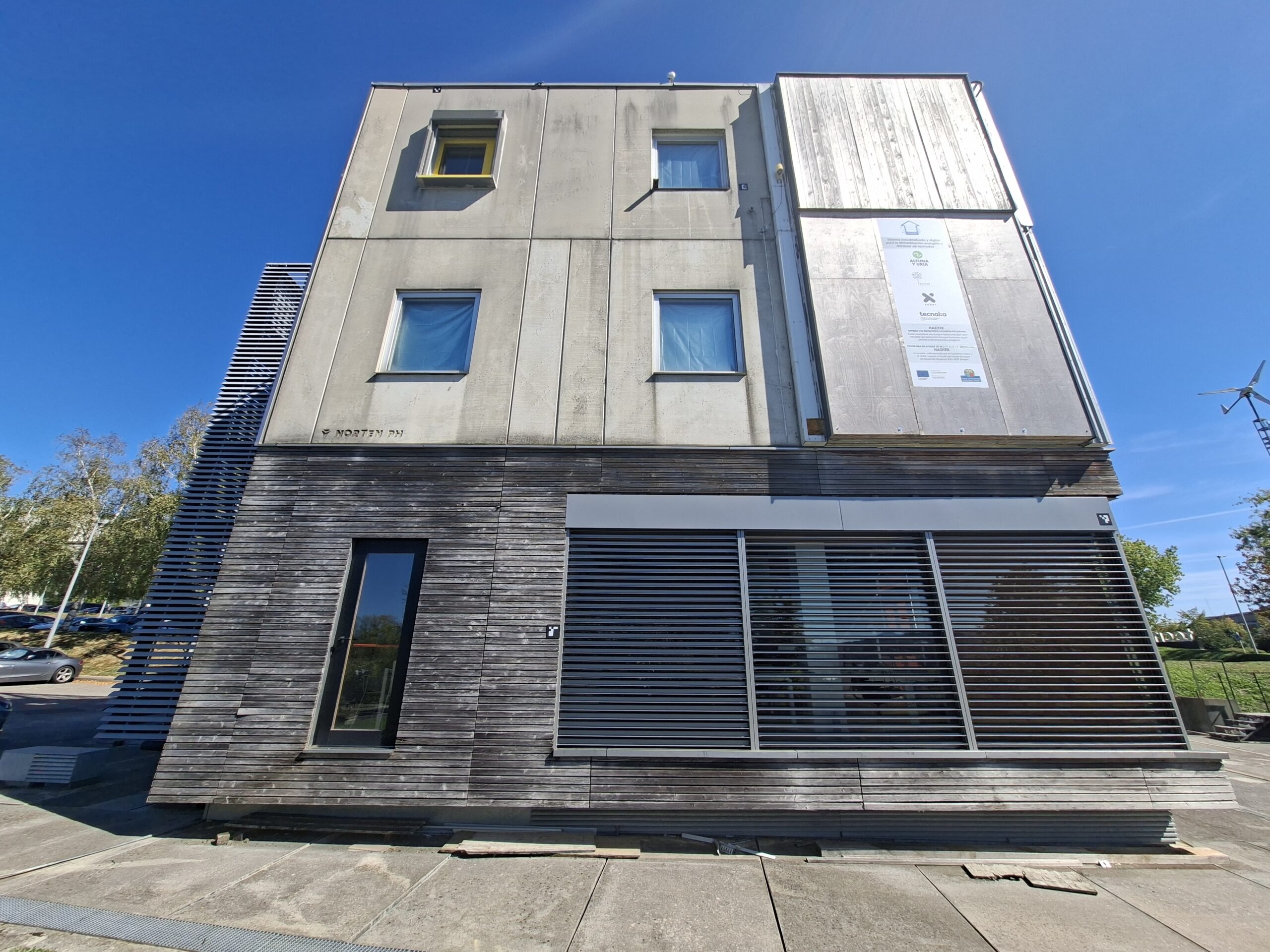
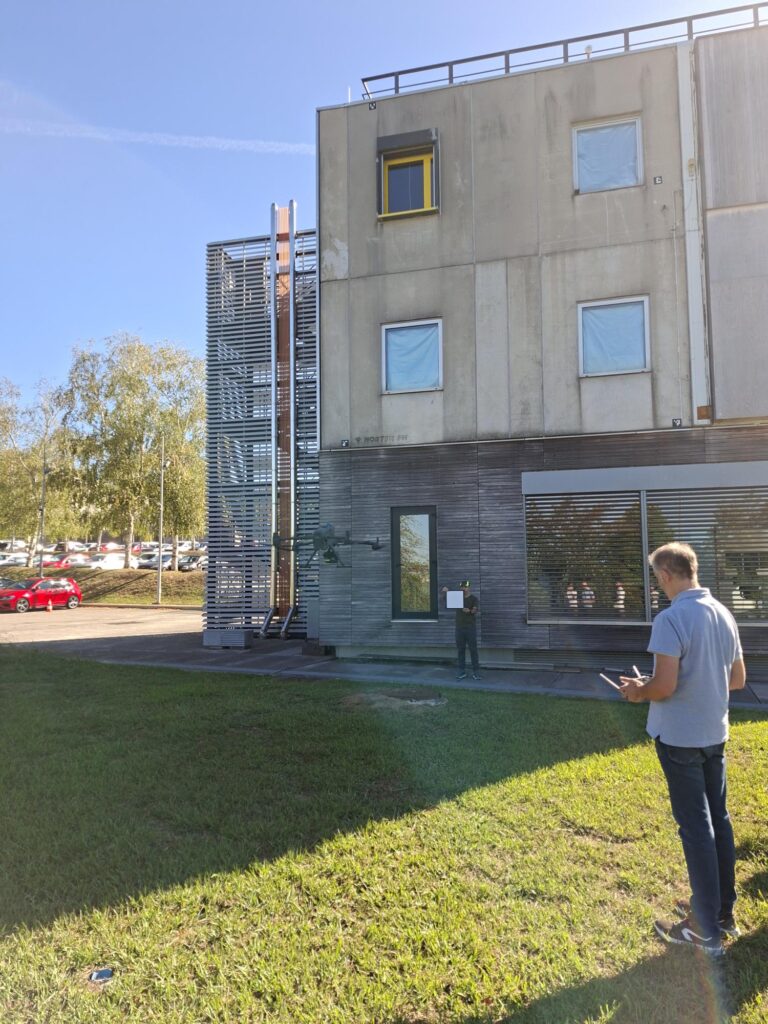
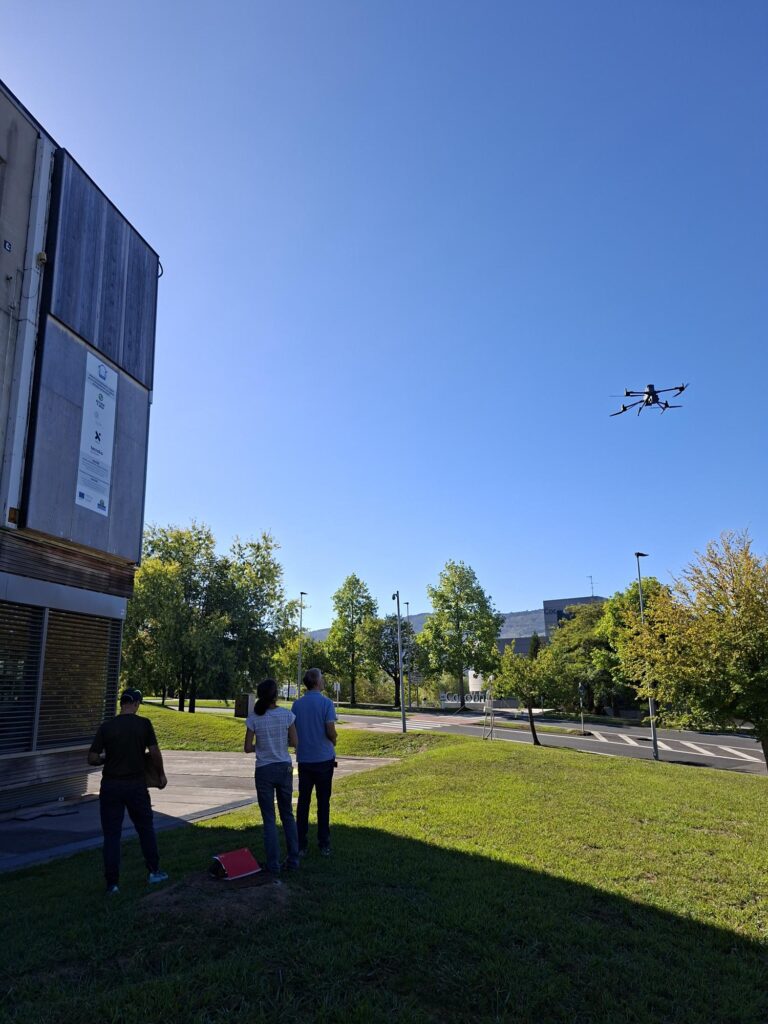
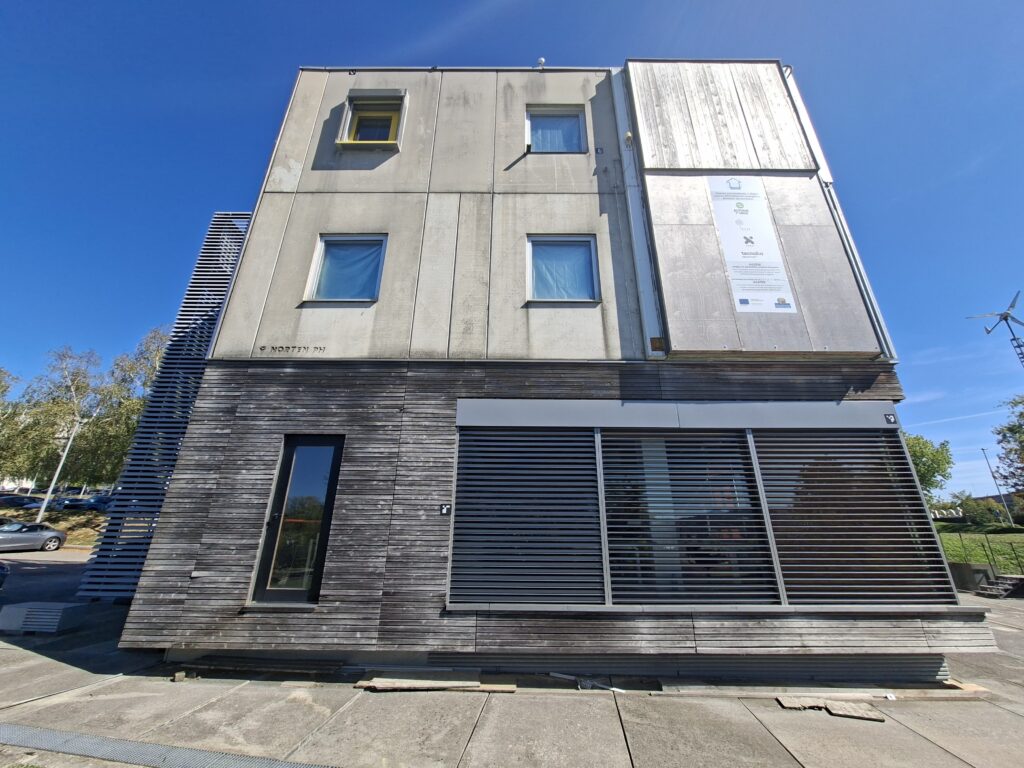
At the KUBIK testing site, RADIANCE partners have carried out technical activities related to UAV-based façade data collection and the preparation of the inspection environment. The work has focused on a selected area of the building’s west façade, consisting of precast concrete elements. Cracks were identified as one of the target defects for the inspection activities. The technical preparations documented by the partners include several important elements:
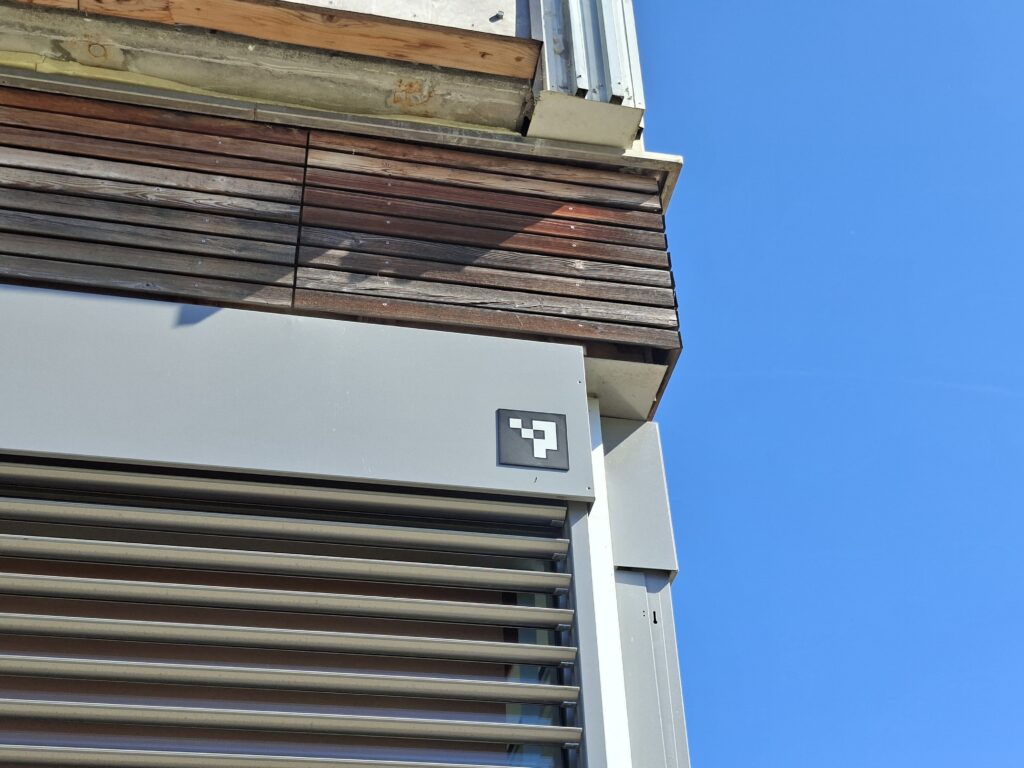
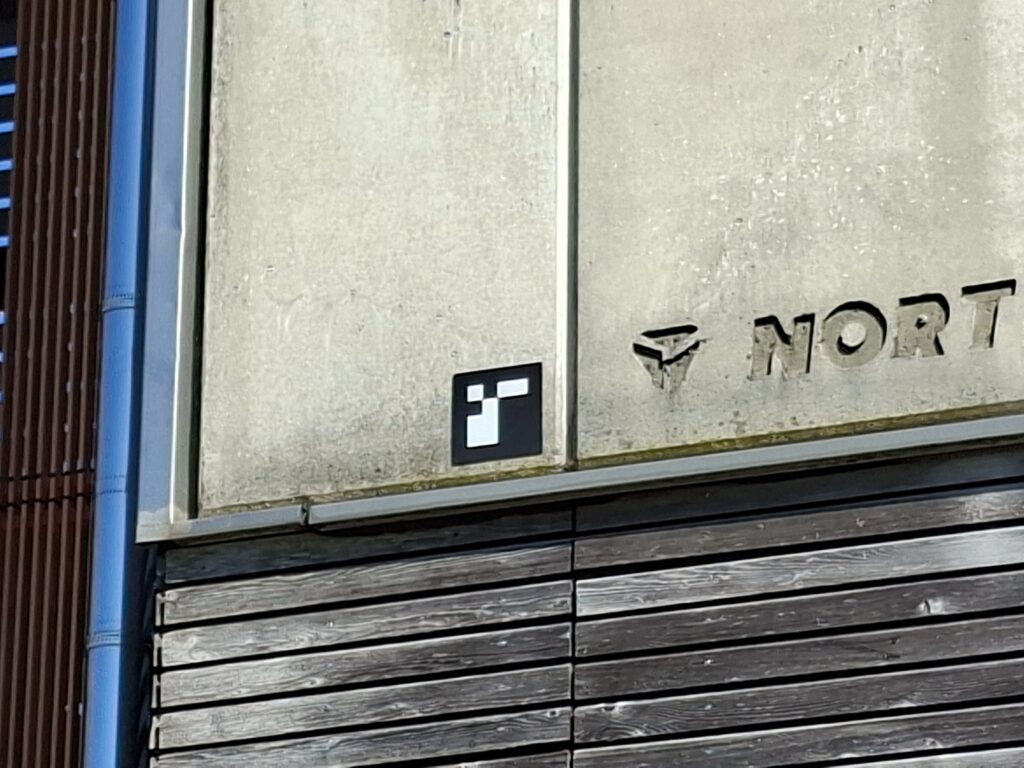
- Reference markers: Four ArUco markers, measuring 15 × 15 cm, were specified as image anchoring points. These markers provide recognisable visual references that can support image localisation and alignment.
- Calibration targets: Geometric, colour and reflectance references were included to support consistent image acquisition and measurement.
- Geopositioning: Configuration and connection between the drone and an RTK antenna formed part of the activities.
- Environmental monitoring: An automatic weather station was used to monitor conditions around the testing environment.
These elements may seem secondary compared with the drone itself, but they illustrate the practical requirements behind reliable building inspection. The activities at KUBIK provide a useful example of how researchers prepare real environments for the development and assessment of more advanced UAV inspection systems.
What Challenges Remain for Autonomous Drone Inspection?
Despite technological progress, autonomous building inspection still faces several challenges. Buildings are rarely uniform. Balconies, windows, complex surfaces and surrounding obstacles can make flight planning and data collection difficult. Positioning systems may experience limitations near structures, and environmental conditions can affect flight stability or sensor performance.
AI models also need reliable training and validation data to distinguish genuine damage from variations in materials, shadows or surface characteristics. Perhaps most importantly, autonomous systems must demonstrate that they can operate safely and consistently in real environments.
This requires more than successful individual tests. Different components — navigation, sensing, detection and decision-making — must work together reliably. Professional supervision and the interpretation of inspection findings therefore remain essential.
From Inspection to Smarter Renovation
The potential of autonomous drone inspection extends beyond collecting images of a building. Within RADIANCE’s Inspection, Diagnosis & Renovation Validation Scenario, UAV inspection is being explored alongside Non-Destructive Evaluation, AI-based defect detection, BIM, Digital Twins and robotic renovation technologies.
The objective is to investigate how information gathered during inspection can support diagnosis, renovation planning and subsequent interventions. These developments form part of the wider Technologies Behind RADIANCE ecosystem, which brings together robotic, sensing and digital solutions.
Ultimately, making drone inspection autonomous is not simply about enabling an aircraft to fly without continuous manual control. It is about developing systems capable of collecting meaningful information, recognising potential problems and responding intelligently while maintaining safe and reliable operation.
As RADIANCE continues its research and validation activities, this approach could contribute to a more connected, data-driven and efficient building renovation process. The future of building inspection may depend not only on what drones can see, but on how intelligently they can use what they discover.