

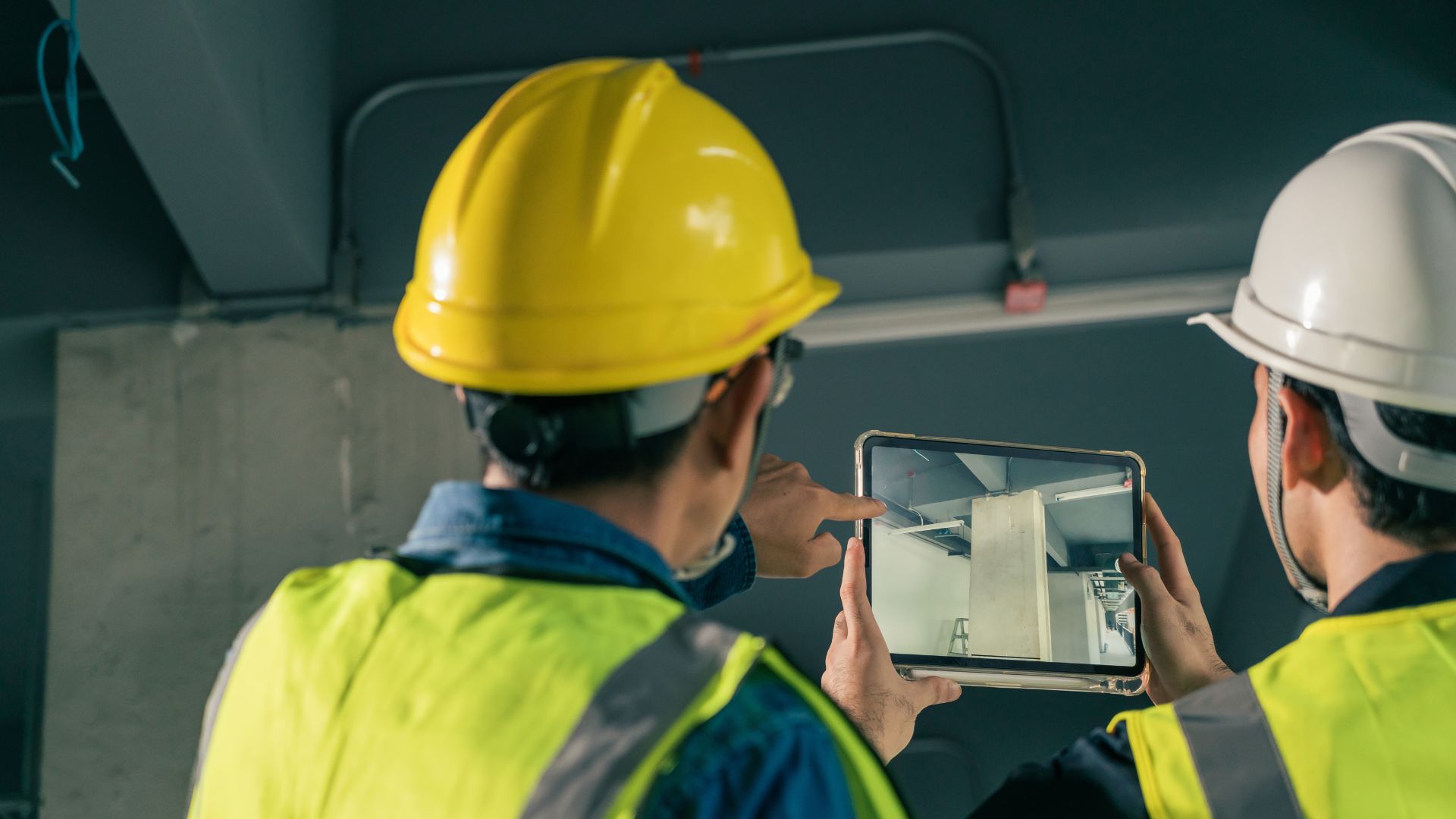
Renovating a building starts long before the first repair is made. Before materials are selected, workers arrive on site or construction begins, there is a fundamental question to answer: what is really happening inside and around the building?
Understanding the condition of an existing building requires information. Inspectors need to identify visible damage, detect problems that may not be immediately apparent, understand energy performance and determine where interventions are needed. Traditionally, much of this process has relied on manual inspections, fragmented documentation and information collected at different stages by different professionals.
Digital Twins offer an opportunity to approach this process differently. By connecting physical buildings with continuously evolving digital representations, they can bring together information from inspections, sensors, Building Information Modelling (BIM) and other digital sources into a common environment.
For renovation, this can mean moving from simply documenting a building to progressively building a digital picture that helps professionals understand its condition, evaluate interventions and make better-informed decisions.

What Are Digital Twins?
A Digital Twin can be understood as a digital representation of a physical asset that is connected to information about its real-world condition and behaviour.
That distinction is important. A 3D model can show what a building looks like. A BIM model can add structured information about its components and characteristics. Digital Twins can take this further by connecting those representations with data generated throughout the building lifecycle.
Depending on the application, this information might include sensor measurements, inspection results, energy performance, environmental conditions, construction progress or maintenance records.
The result is not simply a virtual copy of a building. It is an environment where information can be brought together, updated and interpreted.
This ability to transform data into useful knowledge is becoming increasingly relevant as Europe’s construction sector undergoes both a green and digital transition. Digital Twins are already being explored to support real-time monitoring, predictive analysis, building performance assessment and more informed decision-making.
Why Digital Twins Matter Before Renovation Begins
Europe faces a significant building renovation challenge. Buildings represent around 40% of EU energy consumption and 36% of energy-related greenhouse gas emissions, while approximately 75% of the European building stock has poor energy performance.
Improving this existing building stock is therefore central to Europe’s long-term energy and decarbonisation objectives.
But effective renovation requires understanding what needs to change in the first place.
Before an intervention can be designed, professionals may need to assess façade deterioration, cracks, thermal anomalies, insulation performance or structural conditions. Information may come from photographs, measurements, previous building documentation and inspections conducted by different specialists.
When these sources remain disconnected, creating a complete picture of the building becomes more difficult.
Digital Twins provide a framework through which this information can progressively converge. Instead of treating inspection as an isolated activity, the data collected during this stage can become part of the building’s evolving digital representation.
This creates the foundation for a more data-driven renovation process.
From Inspection Data to Digital Twins
The quality of a Digital Twin depends heavily on the quality of the information behind it.
This is where advances in building inspection become particularly important.
Technologies such as drones can collect visual information from façades, roofs and areas that are difficult or potentially dangerous for workers to access. Other sensing technologies can provide information that cannot be obtained through visual inspection alone.
Non-Destructive Evaluation (NDE), for example, can help investigate the condition of construction elements without damaging them.
Artificial Intelligence can then provide another layer. Computer vision and AI-based analysis can help process large quantities of inspection information to identify and classify potential defects.
The individual technologies are useful, but their real potential emerges when the information they generate can be connected.
An image showing façade damage, a thermal anomaly, information about the condition of concrete and the location of a defect become considerably more valuable when they can be associated with the corresponding element in a digital building model.
The Digital Twin therefore becomes a bridge between what inspectors observe in the physical building and what renovation teams need to know to make decisions.
Digital Twins and BIM: More Than a 3D Model
Digital Twins and BIM are closely related, but they should not be treated as interchangeable concepts.
BIM provides structured digital information about a building and its components and can therefore provide an important foundation for a Digital Twin.
The additional value comes from connecting that digital model with information generated by the physical building and the activities taking place around it.
Imagine that an inspection identifies several cracks across a façade. Rather than recording those findings only in a separate inspection report, their locations and characteristics can be connected to the corresponding building elements.
Additional inspection data can progressively enrich that representation.
This creates a more comprehensive information environment that can support the transition from inspection to diagnosis and, ultimately, intervention planning.
Recent European work on Digital Twins also demonstrates their potential to aggregate otherwise fragmented building information and turn it into decision-support tools. In renovation contexts, this ability to connect data is particularly valuable because existing buildings rarely begin with complete, consistent digital records.
Turning Building Data into Better Renovation Decisions
Collecting more information does not automatically produce better renovation.
The real question is whether that information helps professionals decide what should happen next.
This is one of the most important opportunities created by Digital Twins.
When information about building condition, detected defects, geometry, materials or energy performance is connected, different renovation alternatives can be assessed using a more complete understanding of the existing building.
A Digital Twin can therefore become part of a broader decision-support environment.
Instead of approaching renovation through isolated observations, project teams can work from a shared information base. This can support decisions about which elements require intervention, where resources should be prioritised and how renovation activities should be planned.
Digital Twins can also evolve as the project progresses. Information generated during renovation can update the digital representation, creating a record of what has actually been carried out rather than only what was originally planned.
This connection between physical progress and digital information is what makes the concept particularly powerful for construction and renovation.
How RADIANCE Connects Digital Twins with Inspection and Diagnosis
Within RADIANCE, this connection between the physical and digital building forms part of a wider technological ecosystem.
The project’s Inspection, Diagnosis & Renovation Validation Scenario explores how robotic, sensing, AI and digital technologies can work together during the early stages of renovation and subsequently support semi-automated intervention.
Autonomous drones will support inspections of façades and difficult-to-access areas. Non-Destructive Evaluation technologies will contribute additional information about structural conditions, while AI-based systems will support defect detection and damage classification.
The information generated during these activities can then be integrated into BIM models and Digital Twins.
This is a crucial step.
Rather than considering drone inspection, AI analysis, BIM and Digital Twins as separate innovations, RADIANCE explores how they can form parts of a connected workflow.
Inspect → Detect → Diagnose → Integrate → Decide → Renovate.
The scenario goes even further by connecting diagnosis with intervention. Cable-driven robotic systems will be explored for repair activities such as crack stitching, while an autonomous drone platform will support automated spraying operations.
In this way, the digital representation does not simply document the building. It helps connect information gathered before renovation with the technologies and processes that can subsequently act upon it.
Digital Twins as Part of a Connected Renovation Ecosystem
The future of building renovation is unlikely to depend on one technology alone.
A drone can access a façade. A sensor can measure a physical property. Artificial Intelligence can recognise patterns. BIM can organise building information. A robot can perform a specific operation.
The challenge—and opportunity—is making these technologies work together.
Digital Twins can provide part of that connective layer by creating an environment in which information generated by different systems can be associated with the same physical building and its renovation process.
That has implications beyond inspection.
As renovation progresses, digital environments can potentially support monitoring, construction planning, maintenance and future building management. Instead of information disappearing when one project phase ends, it can remain connected to the asset.
For a construction sector facing increasing pressure to renovate Europe’s existing building stock efficiently, this ability to turn fragmented information into usable knowledge could become increasingly important.
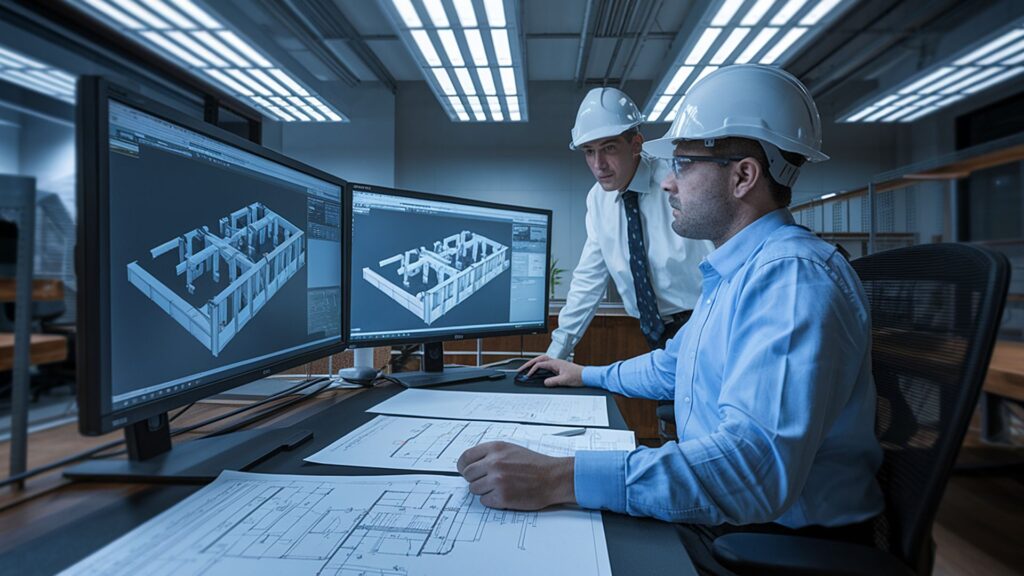
From Building to Blueprint
Digitalisation alone will not renovate Europe’s buildings. Robots, AI and Digital Twins will not eliminate the need for engineers, architects, construction professionals or skilled workers.
What these technologies can change is the information available to them.
Better inspection can generate better data. Better-connected data can support better diagnosis. Better diagnosis can lead to more informed renovation decisions.
This is where Digital Twins become particularly relevant: not as impressive virtual replicas, but as tools for connecting the physical condition of a building with the decisions needed to transform it.
Through its Inspection, Diagnosis & Renovation Validation Scenario, RADIANCE is exploring this journey from the physical building to its digital representation—and from that digital knowledge back to action on the real building.
The blueprint of the future may therefore be much more than a drawing. It may be a continuously evolving digital picture of what a building is, what it needs and how it can be improved.