


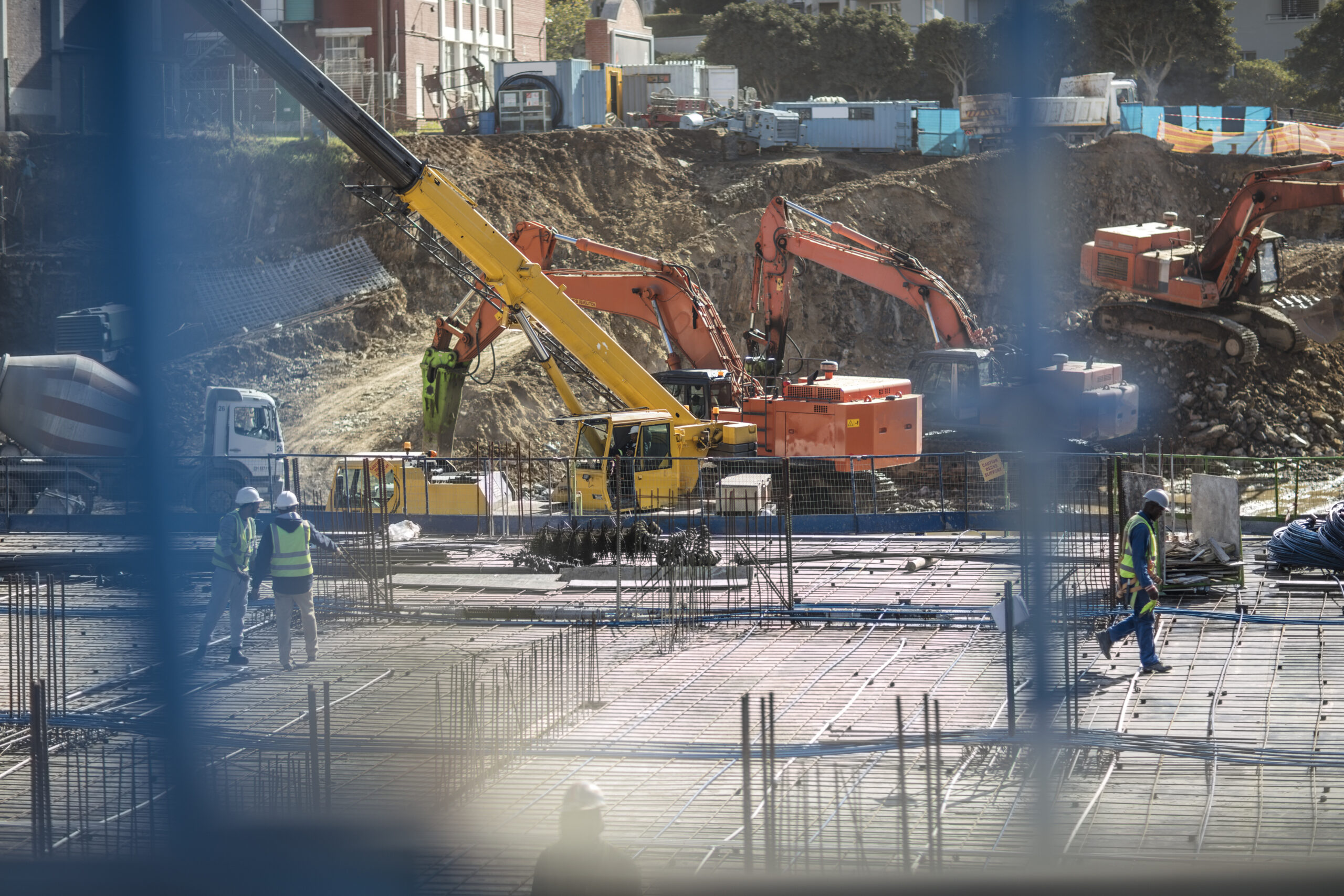
Anyone with experience in construction knows that construction sites are often complex and dynamic environments. Multiple stakeholders must work together while sharing the same space, each with their own responsibilities, tools, schedules, and priorities. Workers, plumbers, electricians, painters, engineers, suppliers, and project managers all play a role in ensuring that a project progresses according to plan.
At the same time, construction sites are constantly receiving materials, equipment, and machinery from different providers, often with different delivery times and logistical requirements. Add unexpected delays, weather conditions, design changes, and safety considerations, and it quickly becomes clear why construction projects can sometimes feel chaotic.
This is where construction site logistics becomes critical. While many people associate logistics simply with deliveries or storage, it is actually a much broader concept that influences almost every aspect of a project. Effective construction site logistics helps ensure that the right people, materials, and equipment are available at the right place and at the right time. When logistics work well, projects become more predictable, efficient, and sustainable. When they do not, delays, waste, rework, and rising costs often follow.
As Europe accelerates renovation activities through initiatives such as the Renovation Wave, improving construction site logistics is becoming increasingly important for the future of the construction sector.
Why Construction Site Logistics Matters
Construction projects are often judged by three key factors: time, cost, and quality. What is less visible is that logistics directly influences all three.
Good logistics planning ensures that resources are available when needed, that tasks can be completed without interruptions, and that workers can operate safely and efficiently. It creates the conditions for smooth project execution by coordinating people, materials, machinery, and information.
However, construction site logistics is far more challenging than logistics in traditional manufacturing environments. Factories operate in controlled settings where processes are standardized and predictable. Construction sites, on the other hand, are constantly changing. Every project is unique, every site has different constraints, and unexpected situations are common.
Because of this complexity, logistics cannot be treated as an afterthought. It must be integrated into project planning from the earliest stages. Without a structured approach, even well-designed projects can encounter significant disruptions that affect productivity and profitability.
Ultimately, construction site logistics is not just about moving materials. It is about creating the conditions that allow an entire project ecosystem to function effectively.
The Challenges of Construction Site Logistics
One of the biggest challenges in construction site logistics is planning. In theory, planning sounds straightforward: define the tasks, schedule them correctly, and ensure that the required resources are available when needed.
In practice, however, construction projects rarely unfold exactly as planned.
Schedules frequently change due to weather conditions, unexpected site discoveries, design modifications, permit issues, or supply chain disruptions. These changes can create a domino effect across the entire project, impacting deliveries, workforce allocation, and material management.
A common problem occurs when logistics planning is not sufficiently aligned with project schedules. Materials may arrive too early, creating storage problems and increasing the risk of damage. Alternatively, they may arrive too late, causing delays that affect multiple teams and activities.
Poor planning can also lead to inefficient material distribution within the site. Workers may spend valuable time searching for tools or materials, while equipment remains underutilized due to a lack of coordination. Over time, these inefficiencies accumulate and can significantly increase project costs.
This is why effective construction site logistics requires continuous monitoring, coordination, and adaptation throughout the entire project lifecycle.

Transportation: More Than Moving Materials
Transportation is another critical component of construction site logistics. Every project depends on a constant flow of materials, machinery, and equipment moving between suppliers, warehouses, and construction sites.
While transportation is often considered a routine activity, its impact on project performance can be substantial.
Transportation delays can interrupt construction activities, create scheduling conflicts, and increase costs. In many projects, deliveries are managed by third-party providers, making visibility and coordination even more challenging.
Beyond operational concerns, transportation also has environmental implications. The movement of materials contributes to carbon emissions, and its impact varies depending on the transport method, distances travelled, vehicle efficiency, and load management.
Last-minute changes further complicate the situation. When schedules are modified unexpectedly, deliveries often need to be rescheduled, increasing both costs and environmental impacts.
Improving transportation planning is therefore not only a question of efficiency but also a step towards more sustainable construction practices.
Storage, Material Flow, and Site Efficiency
Closely linked to transportation is the challenge of managing materials once they arrive on site.
Efficient material flow is essential for productivity, safety, and cost control. Construction sites must maintain a careful balance between having sufficient materials available and avoiding excessive stock that consumes valuable space.
Poor storage practices can create congestion, reduce worker mobility, and increase safety risks. Materials that are stored incorrectly may become damaged or lost, leading to unnecessary replacements and additional costs.
Construction site logistics plays a fundamental role in preventing these problems by coordinating deliveries according to project needs and available storage capacity.
Effective logistics also requires strong communication between project teams and suppliers. Accurate forecasting, reliable delivery schedules, and real-time information sharing help ensure that materials arrive when needed and can be distributed efficiently across the site.
When material flow is properly managed, projects benefit from greater productivity, reduced waste, and improved working conditions.
Communication: The Foundation of Construction Site Logistics
If there is one factor that connects every aspect of construction site logistics, it is communication.
Construction projects involve a large number of stakeholders, including contractors, subcontractors, suppliers, logistics providers, project managers, and site workers. Each of these actors depends on accurate and timely information to perform their tasks effectively.
When communication breaks down, planning becomes unreliable. Deliveries may be missed, schedules may become outdated, and critical information may fail to reach the people who need it most.
In many cases, logistical problems are not caused by a lack of resources but by a lack of coordination.
As projects become increasingly complex, the ability to exchange information efficiently is becoming just as important as the physical movement of materials. Digital communication tools, real-time monitoring systems, and integrated data platforms are helping address these challenges by providing greater visibility across the entire construction process.
In this context, construction site logistics is evolving from a largely manual process into a data-driven discipline capable of supporting more informed decision-making.
How Digital Technologies Improve Construction Site Logistics
The construction sector is increasingly recognizing that improving logistics requires more than better organization. It also requires smarter tools.
Digitalisation is opening new opportunities to optimize planning, improve coordination, and increase visibility across construction projects.
Technologies such as Artificial Intelligence (AI), digital twins, autonomous robots, drones, and real-time monitoring systems are helping project teams make better decisions based on accurate and up-to-date information.
Digital twins, for example, create virtual representations of construction projects that integrate models, sensor data, and site information. This enables project managers to monitor progress, identify potential issues, and optimize workflows before problems escalate.
AI-powered planning tools can analyse project data to improve scheduling and resource allocation, helping reduce delays and inefficiencies. At the same time, automated monitoring systems provide continuous insights into site conditions, material availability, and project performance.
Together, these technologies are transforming construction site logistics from a reactive process into a proactive one.
RADIANCE and the Future of Construction Site Logistics
This is precisely where the RADIANCE project contributes to the transformation of the construction sector.
One of the project’s key Validation Scenarios focuses on Construction Optimisation and Logistics, demonstrating how advanced digital technologies can address some of the industry’s most persistent challenges.
At the core of this scenario is a Digital Twin platform that integrates building models, real-time sensor data, and site information. Combined with AI-based planning tools, the platform supports workflow optimization, resource tracking, and more accurate scheduling. This helps solve one of the most common logistical problems in construction: ensuring that resources arrive when they are needed, neither too early nor too late.
RADIANCE also deploys quadruped robots capable of monitoring construction sites, performing surveys, and supporting internal logistics operations. These robots can autonomously track materials and resources, reducing manual inventory errors and improving operational efficiency.
To strengthen communication and coordination, the project explores Augmented Reality tools that provide real-time guidance to workers, alongside advanced communication systems that improve on-site safety and collaboration.
In addition, autonomous drones equipped with AI-powered defect detection capabilities help perform accurate inspections and assessments during the early stages of a project. By identifying issues before they escalate, these technologies help reduce rework, improve planning accuracy, and support data-driven decision-making.
Together, these solutions demonstrate how automation and digitalisation can transform construction site logistics into a strategic driver of efficiency and sustainability.
Conclusion
Construction projects will always involve complexity. Multiple stakeholders, changing conditions, material dependencies, and unexpected events are part of the reality of the sector. However, complexity does not have to result in inefficiency.
Effective construction site logistics provides the foundation for successful project delivery. By improving planning, transportation, material management, and communication, construction teams can reduce delays, minimize waste, improve safety, and optimize costs.
As construction and renovation activities continue to grow across Europe, the need for smarter logistics solutions will only increase. Emerging technologies such as AI, digital twins, autonomous robots, and intelligent monitoring systems are already demonstrating their potential to transform how projects are managed.
Through initiatives like RADIANCE, the construction sector is moving towards a future where construction site logistics is no longer a source of disruption, but a powerful enabler of efficiency, sustainability, and innovation.